Monthly Archives: January 2023

Green energy: Don’t stick Granny with the bill

by Planning Engineer (Russell Schussler)

Renewable energy has an equity problem.  Energy policies that force consumers to incur huge costs to meet larger public aims become a hidden form of taxation.  Energy bills eat up much larger proportions of income for those at the lower end of the economic scale.
Continue reading

Rapid technological innovation – not harmful renewables policy – key to lighting our energy future

by Judith Curry

Framework for a robust transition of our energy systems.

Continue reading

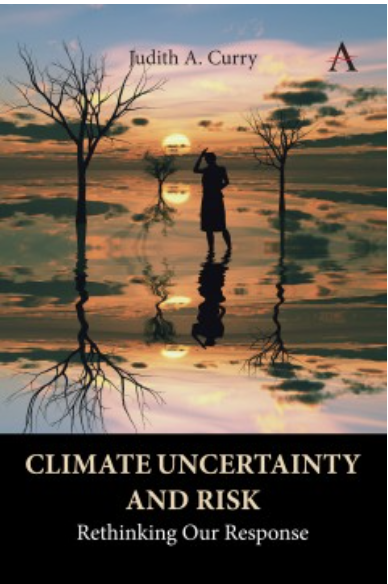
Climate Uncertainty and Risk: in press

by Judith Curry

My book Climate Uncertainty and Risk has now been accepted for publication, following peer review and submission of my revised manuscript.

Continue reading

Academics and the Grid Part 3: Visionaries and Problem Solvers

by Planning Engineer (Russell Schussler)

The potential of climate change with an unworkable grid is the most frightening potential scenario of all.  We need visionaries and problem solvers to avoid this scenario.

Continue reading

Academics and the grid. Part II: Are they studying the right things?

By Planning Engineer (Russell Schussler)

Influential academics as a body are encouraging an energy transition to renewables, discussing remote hopes and ignoring huge obstacles and greater costs, which will worsen reliability and eventually result in unbearable blackouts.

Continue reading

Academics and the grid Part I: I don’t think that study means what you think it means

By Planning Engineer (Russell Schussler)

The media, individuals, and policy makers are prone to serious misunderstanding of studies, reports and pronouncements coming from academic experts. It is important to carefully read and interpret academic publications to understand what has been studied and what is being claimed. Far too many dismiss the many wide-ranging formidable challenges inherent in green energy efforts due to their misreading and misunderstanding of academic publications.

Continue reading